Your roof’s worst enemy isn’t always hail or heavy snow. It’s the silent damage happening right above your headin your attic. Proper attic ventilation is one of the most overlooked ways to protect your asphalt shingles and keep your roof lasting decades instead of years. When air can’t flow freely through your attic,
Moisture builds up, heat becomes trapped, and your shingles deteriorate from the inside out. If you’re a homeowner in Longmont or Boulder, understanding how ventilation works could save you thousands in roof repairs. Let’s break down why this matters and what you can do about it.
How Attic Ventilation Works
Your attic isn’t just dead space above your head. It’s a critical part of your home’s climate system. Proper roof ventilation relies on a simple principle: hot, moist air needs a way out.
In a well-ventilated attic, intake vents (usually soffit vents) pull cooler air in from the edges. This air flows across your attic and exits through exhaust vents near the roof peak. Gable vents or ridge vents handle the outflow. This constant circulation keeps your attic temperature closer to the outside air temperature.
Without proper ventilation, your attic becomes stagnant. Heat gets trapped. Moisture lingers. Your roof ventilation system, when installed correctly, prevents both problems at once. The continuous air circulation is what keeps everything balanced.
Think of it like your home breathing. Fresh air comes in, stale air goes out. When that system breaks down, everything inside suffers. Your asphalt shingles are no exception. They need that air movement to stay healthy.
The Connection Between Ventilation and Roof Lifespan
Here’s the reality: asphalt shingles have an expected lifespan of 20 to 30 years. But that’s only if conditions are right. Poor ventilation can cut that in half.
Heat Damage
Heat is a shingle killer. When your attic temperature climbs above 160°F in summer, the asphalt in your shingles starts breaking down faster. The granules that protect the shingles from UV rays wear away quicker. The asphalt becomes brittle. Cracks form. What should last 25 years fails at 12.
Proper attic insulation and ventilation work together to prevent excessive heat buildup. The air circulation keeps your attic cooler, which means your shingles stay intact longer. In Longmont’s hot summers, this makes a real difference.
Moisture Damage
Moisture is equally destructive. Water vapor rises from your living spaces—from bathrooms, kitchens, laundry rooms. Without a way out, it condenses in your attic. This causes several problems:
- Mold and mildew grow on wood
- Wood rot weakens roof framing
- Insulation loses its R-value when wet
- Ice dams form in winter (more on this below)
- Sheathing warps, putting stress on shingles
A good roof ventilation system pulls this moisture out before it causes damage. That’s why ventilation improvement is so critical for roof longevity.
Ice Dams in Winter
This is where ventilation becomes a lifesaver in Colorado winters. When your attic is too warm, snow on your roof melts. The water runs down and refreezes at the cold eaves, creating ice dams. These dams trap water, which seeps under your shingles and into your home.
Proper ventilation keeps your entire roof cold and uniform. Snow melts only when outside temperatures warm up, not from heat leaking through. No warm spots means no ice dams. Your roof stays protected all winter long.
Signs Your Longmont Home Needs Better Ventilation
Not sure if your attic has adequate ventilation? Here are the telltale signs.
Visible Moisture or Mold
If you go into your attic and see dark spots, wet insulation, or condensation on the underside of the roof, you have a ventilation problem. Check especially after heavy rain or snow. Any moisture lingering in your attic means air isn’t flowing properly.
Hot Attic in Summer
An attic that’s unbearably hot even on mild days suggests poor air circulation. Walk up there on a summer afternoon. If it feels like an oven, heat is building up instead of escaping.
Sagging or Damaged Shingles
Premature shingle deterioration often points to ventilation issues. If your asphalt shingles are curling, blistering, or losing granules way too early, check your attic first. Poor ventilation may be the culprit.
Ice Dams Every Winter
Do you get ice buildup along your gutters every winter? This is a classic sign of a warm attic. The solution isn’t just better gutters it’s better ventilation.
High Energy Bills
A poorly ventilated attic forces your AC to work harder in summer. Your cooling system can’t compensate for the heat trapped above. This drives up your electric bill. Better ventilation reduces the strain.
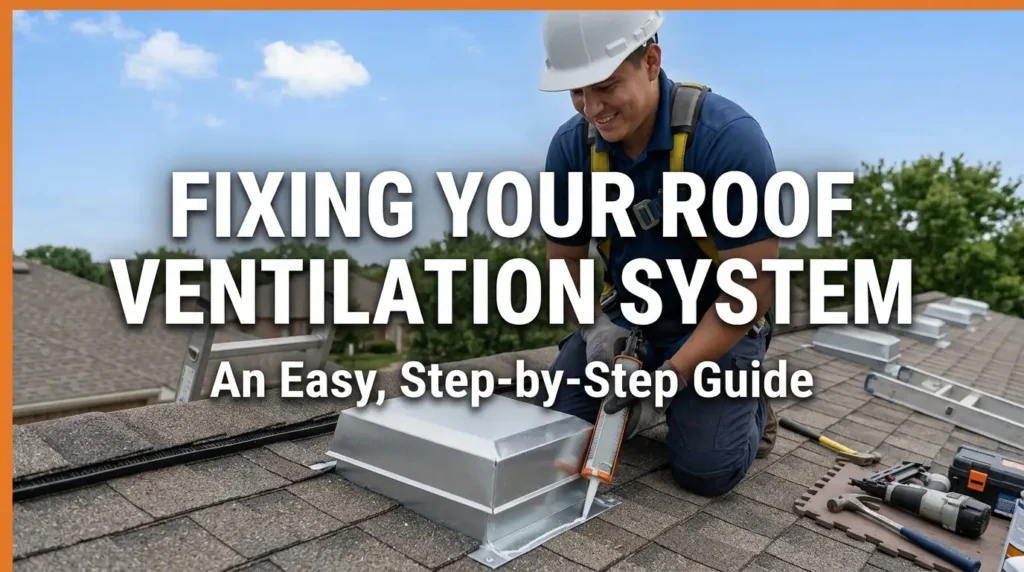
Fixing Your Roof Ventilation System
If your attic needs help, there are proven solutions. The key is balance between intake and exhaust vents.
Soffit Vents for Intake
Soffit vents run along the underside of your roof’s overhang. They pull in cool, outside air. If you have soffit vents but they’re clogged with insulation or debris, clear them. If you don’t have them, installation is one of the best ventilation improvements you can make.
Ridge Vents or Gable Vents for Exhaust
Ridge vents run the full length of your roof peak. They’re invisible from the ground but highly effective. Gable vents work too, though they’re less efficient if soffit vents pull air from only one side.
Attic Fans (Sometimes)
Some homes benefit from attic fans that actively pull air out. However, these only work if you have balanced intake vents. Without good intake, fans just suck conditioned air from your living space, which wastes energy.
Professional Assessment
Your best move? Have a roofer inspect your attic. They can measure venting, spot blockages, and recommend the right upgrades for your Longmont home. Every attic is different.
Local Climate Considerations for Boulder and Longmont
Colorado’s climate makes roof ventilation even more critical.
Intense Summer Sun
Our high altitude means intense UV exposure. Combined with heat, it accelerates shingle aging. Proper cooling through ventilation directly counters this.
Dramatic Temperature Swings
We can see 40°F swings between day and night. Thermal expansion stresses shingles constantly. Ventilation that keeps temperatures steady reduces this stress.
Heavy Snow and Ice
Colorado winters demand smart ventilation that prevents ice dams without letting heat escape into living spaces. It’s a balance. Proper insulation and ventilation together solve this.
Low Humidity
Our dry climate is actually an advantage for ventilation. Air moves quickly. Just make sure your vents aren’t blocked.
FAQ
What’s the ideal attic ventilation ratio?
The standard rule is 1 square foot of ventilation for every 150 square feet of attic space. Half should be intake (soffit), half exhaust (ridge or gable). For hot climates like ours, some roofers recommend 1:120. Your roofer can calculate the right amount for your specific home.
Can I add ventilation without replacing my roof?
Yes. You can install soffit vents, add ridge vents, or upgrade gable vents without a full roof replacement. If your shingles are in good shape, focus on ventilation alone. This is often the most cost-effective approach.
Will better ventilation lower my energy bills?
Absolutely. A cooler attic means less strain on your AC system in summer. You might see 10–15% savings on cooling costs. In winter, proper ventilation prevents heat loss, too. The payback period is usually 3–5 years.
How often should I check my attic ventilation?
Check twice a year spring and fall. Look for blockages, moisture, or debris. After heavy storms, inspect for damage. Annual professional inspections are also smart, especially if your home is over 10 years old.
Does attic insulation interfere with ventilation?
No, if installed correctly. Insulation should never block soffit vents. Keep it 1–2 inches away from eaves. Many attic ventilation problems stem from insulation accidentally covering intake vents. Ask your installer to maintain clearance.
How long does ventilation installation take?
Most ventilation upgrades take 1 2 days. Soffit and ridge vent installation is relatively quick. The timeline depends on your roof size and how many vents need updating. Your contractor will give you a precise estimate.
Conclusion
Proper attic ventilation is one of the smartest investments a Longmont or Boulder homeowner can make. It extends your roof life, prevents costly moisture damage, eliminates ice dams, and lowers energy bills. The cost of ventilation improvements is minimal compared to premature roof replacement.
Don’t wait for problems to show up. Check your attic today. If you see moisture, excessive heat, or know your home is older, call a professional Better ventilation means a roof that lasts decades and a home that stays protected year-round.