
A bad storm can leave your home in rough shape fast. Hail damage restoration, Roof repair and emergency roofing services aren’t things most people think about until they suddenly need them. This guide walks you through exactly what to do after a storm hits. From your first property inspection to working with a roofing contractor, you’ll know what steps to take and when to take them.
Is Your Home Safe After a Storm?
Don’t rush outside the second a storm passes. Wait until the weather is fully clear. Falling debris, downed power lines, and slick surfaces can hurt you. Once it’s safe, do a quick walk around the outside of your home. You’re not climbing on anything yet just looking.
Check for visible damage from the ground. Look at your roof, gutters, siding, and windows. Take photos of everything you see. These will matter when you file an insurance claim. Getting visual evidence early protects you during the restoration process.
What Does Hail Damage Look Like?
Hail damage restoration starts with knowing what to look for. Hail hits hard, and it doesn’t always leave obvious marks. On asphalt shingles, look for dark spots or dents. They’ll feel soft if you press them like a bruise on fruit. Those spots are where the protective granules have been knocked off.
On metal surfaces like gutters or vents, hail leaves small round dents. On wood shingles, you might see splits or cracks. The damage isn’t always dramatic. But it’s serious. Even small impacts break down your roof’s ability to protect your home over time.
How Bad Can Wind Damage Get?
Wind damage from storms can range from minor to severe. Strong gusts can lift shingles completely off your roof. They can snap tree branches onto your home. They can loosen flashing around chimneys, skylights, and vents.
A storm-damaged roof from wind doesn’t always look destroyed from the street. But missing shingles, curled edges, and loose flashing create entry points for water. That water causes mold, rot, and structural damage inside your walls and attic. Wind damage needs to be caught early before the next rain makes it worse.
What Steps Should You Take Immediately After Storm Damage?
Do a Safe Property Inspection
Start from the ground. Walk the perimeter of your home. Look up at the roofline, check the gutters, scan the siding. Don’t go on the roof yourself. It’s wet, slippery, and possibly structurally compromised. Leave the roof inspection to a qualified roofing contractor.
Document Everything
Photograph every angle. Shoot wide shots and close-ups. Capture damaged shingles, dented gutters, broken windows, fallen branches all of it. Do this before any cleanup begins. Your insurance company needs this documentation. Don’t skip it.
Prevent Further Damage
If you have a hole in your roof or a broken window, water is your next enemy. Use tarps to cover roof openings if it’s safe to do so from a ladder. Board up broken windows temporarily. These short-term fixes count as reasonable steps to prevent additional damage. Your insurance policy may actually require this.
Call Your Insurance Company
Report the damage as soon as possible. Most policies have timelines you need to follow. Be ready to share your photos and describe what happened. Ask about your deductible, your coverage, and the claims process. Get everything in writing.
Schedule Emergency Roofing Services
Don’t wait weeks for a regular appointment. Call a roofing contractor who offers emergency roofing services. They can assess the damage, secure your roof temporarily, and give you a written estimate for full repairs. Make sure they’re licensed and insured before any work begins.
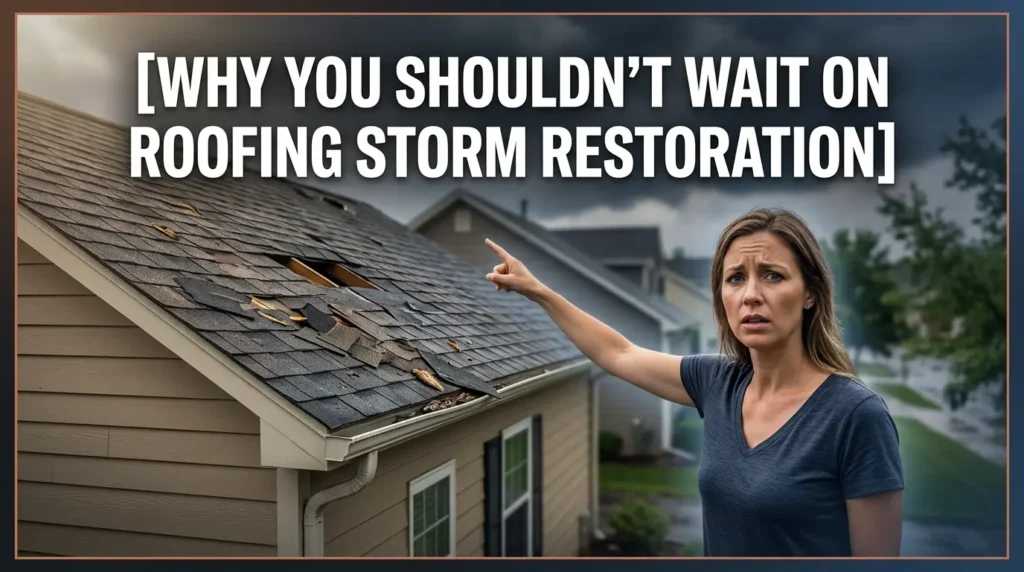
Why You Shouldn’t Wait on Roofing Storm Restoration
Some homeowners think they can wait a few weeks before addressing roof damage.That’s a costly mistake. Roofing storm restoration needs to start quickly because delays lead to bigger problems.
A small leak becomes a large one after the next rainstorm. Moisture gets into insulation and drywall. Mold can start growing in as little as 24 to 48 hours. Structural wood begins to rot. What might have been a straightforward roof repair turns into a much bigger renovation job. Acting fast keeps costs down and protects your family’s health.
How Do You Choose the Right Roofing Contractor?
This is where homeowners often get burned. After a major storm, contractors flood into neighborhoods offering quick fixes. Not all of them are trustworthy. Here’s what to look for in a roofing contractor:
License and Insurance Always verify both. A legitimate contractor carries liability insurance and workers’ comp. If something goes wrong on your property, you don’t want to be liable.
Local Experience A local roofing contractor knows your area’s building codes and weather patterns. They’re also accountable to the community. Out-of-town storm chasers may disappear after collecting payment.
Written Estimates Get at least two or three quotes. A reputable contractor provides a detailed written estimate. It should list materials, labor, and timeline.
No Upfront Full Payment Never pay the full cost before work begins. A deposit is normal. Paying everything upfront is a red flag.
References and Reviews Check Google reviews. Ask for references from past customers. Look for consistent feedback about quality and reliability.
What Does the Restoration Process Look Like?
Understanding the restoration process helps you set realistic expectations. Here’s a general overview of how hail damage restoration and roof repair typically unfold.
Initial Inspection A roofing contractor inspects the full roof and documents damage. They may include this assessment in photos submitted to your insurance company.
Insurance Adjuster Visit Your insurance company sends an adjuster to evaluate the damage. Your contractor can meet with them to make sure nothing gets missed.
Approval and Scheduling Once your claim is approved, the contractor orders materials and schedules the job. Supply availability can affect timing.
Roof Repair or Replacement Depending on the severity, your storm-damaged roof may need a partial repair or a full replacement. The contractor removes damaged materials and installs new ones according to current building codes.
Final Inspection A final walkthrough ensures the work meets quality standards. Some local jurisdictions require a permit and official inspection.
Does Homeowner’s Insurance Cover Storm Damage Repair?
Most standard homeowner’s insurance policies do cover storm damage repair from hail and wind. But there are limits. Your coverage depends on your specific policy, your deductible, and how old your roof is.
Some policies pay actual cash value meaning they factor in depreciation. Others pay replacement cost value, which covers the full cost of new materials. Read your policy carefully. Ask your agent to explain the difference. If your claim is denied, you can dispute it or hire a public adjuster to advocate on your behalf.
FAQS
How soon should I call a roofing contractor after a storm?
Call as soon as the storm passes and it’s safe to do so. Most insurance policies require you to report damage promptly. Waiting too long can give insurers a reason to deny your claim. Emergency roofing services are designed for situations exactly like this; don’t hesitate to use them.
Can I do a roof inspection myself after a storm?
You can do a basic visual inspection from the ground. Look for missing shingles, dented gutters, and debris. But don’t climb onto the roof yourself. It’s dangerous, especially right after a storm. A licensed roofing contractor has the tools and experience to inspect safely and document everything properly for your insurance claim.
What’s the difference between roof repair and full replacement?
Roof repair addresses specific damaged areas: a few missing shingles, damaged flashing, or a small leak. Full replacement means removing all existing roofing material and starting fresh. The right choice depends on the age of your roof, how widespread the damage is, and what your insurance covers. Your contractor can help you decide.
How long does hail damage restoration take?
Simple repairs can take one to two days. A full roof replacement typically takes two to five days depending on roof size and material. Weather delays and material availability can add time. Your roofing contractor should give you a clear timeline in writing before work begins.
Will my insurance premiums go up if I file a storm damage claim?
It depends on your insurer and your history. Storm damage is typically considered a “no-fault” claim since it’s weather-related. But repeated claims over a short period can still affect your rate. Talk to your insurance agent before filing to understand the potential impact on your premiums.
How do I know if my roof needs replacing or just repairs after a storm?
Age is a big factor. If your roof is over 15 to 20 years old and has widespread damage, replacement often makes more sense than patchwork repairs. A roofing contractor can assess the structural integrity and give you an honest recommendation. Get a second opinion if something feels off.